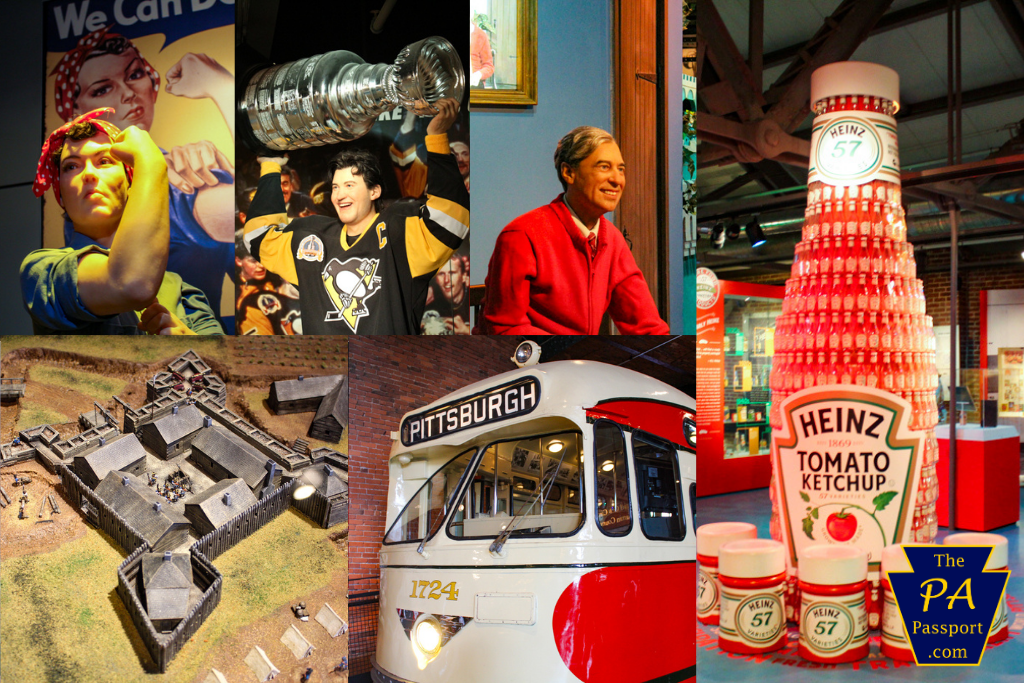
If you want to understand Pittsburgh, the Heinz History Center is the place to start. It stands as the largest history museum in Pennsylvania and a nationally celebrated destination, voted #1 History Museum in America by USA Today in 2024 and 2025 in its annual Readers’ Choice Awards. Whether you’re a history buff, a family looking for an interactive day out, or a visitor curious about Pittsburgh’s history and sports, the History Center offers something compelling on every floor.
Address: 1212 Smallman St, Pittsburgh, PA 15222
Category: Museum
Duration: Multiple Hours
Directions, Hours, Admission
The Heinz History Center is located at 1212 Smallman St, Pittsburgh, PA 15222 in Pittsburgh’s historic Strip District. The museum is open daily from 10 a.m. to 5 p.m.
Adults can explore the museum for $20, while seniors 65 and older receive a reduced rate of $18. Students with a valid ID pay $11, and thanks to the Kamin “Free for Kids” initiative, all youth ages 0–17 receive free admission. Admission is also often valid for the next day and includes free entry to the Fort Pitt Museum at Point State Park with a valid receipt.
While the museum doesn’t have its own parking lot, the Strip District has both street parking and nearby parking garages/lots. If you happen to visit on a Sunday, street parking is free. Its location also makes it an easy walk for anyone who may be downtown.
Be sure to check out their website for the latest hours, updates and admission costs.

The Great Hall and 1st Floor
When you enter the museum, you enter into the Great Hall. The hall features many larger artifacts, including an antique fire engine, the Heinz Hitch, and an antique trolley. A small café and museum shop can also be found of the first floor for visitors to enjoy.

The first floor is also home the Smithsonian Institution Affiliations Program hall. The hall features rotating exhibits that are often Pittsburgh-based, but have also featured Smithsonian exhibits such as Destination Moon: The Apollo 11 Mission.

Currently, the museum is featuring its Pittsburgh’s Hidden History Exhibit. This exhibit showcases many of the artifacts that aren’t typically on public view. Here, you’ll find everything from creepy dolls to a flint tool dating back thousands of years, and even a 1910 Honus Wagner baseball card. The Pittsburgh’s Hidden History exhibit is open through April 4, 2026.

Located by the stairway near the elevators is the first SmartSteps station. Visitors are encouraged to use the steps, and stamp each floor they visit. The six-story staircase features colorful murals, wellness tips, and fun Pittsburgh history facts that encourage visitors to choose the stairs over the elevator. And for those who make it all the way to the top, the museum offers a special keepsake that is redeemable in the museum shop.

Pittsburgh: A Tradition of Innovation
The museum’s second floor is home to two exhibits, Pittsburgh: A Tradition of Innovation and the Western PA Sports Museum. The Pittsburgh: A Tradition of Innovation exhibit is one of the centerpiece galleries of the Heinz History Center, celebrating the city’s long-standing role as a hub of ingenuity and invention.

The exhibit spans multiple centuries, highlighting breakthroughs from the industrial revolution to the modern digital age. Long before Andrew Carnegie built his steel empire. In the 18th and early 19th centuries, Pittsburgh was a frontier outpost. Early settlers and entrepreneurs leveraged the region’s natural resources, including rivers, timber, and coal, to establish sawmills, glassworks, iron furnaces, and river-based transportation systems.

This foundation of resourcefulness, engineering skill, and entrepreneurial spirit set the stage for later innovators like Carnegie, Westinghouse, and Ferris. By exploring this pre-industrial era, visitors see how Pittsburgh’s culture of problem-solving and ingenuity didn’t begin with steel mills.

The exhibit also highlights Pittsburgh’s impact on medicine and public health, featuring Dr. Jonas Salk’s polio vaccine, early medical instruments, and innovations from local hospitals. It includes Freedom House Ambulance Service, which trained the nation’s first Black paramedics, and Mr. Yuck, the iconic symbol teaching children about poisonous substances.

Western Pennsylvania Sports Museum
Spanning the second and third floors, the Western Pennsylvania Sports Museum is a must-see destination for sports fans and history enthusiasts alike. The exhibit highlights not only the national prestige of Pittsburgh sports, but also the many successful high schools and colleges in the region.

The Super Steelers section chronicles Pittsburgh’s football legacy from its earliest days to the present. Here, visitors encounter jerseys, helmets, and memorabilia from legendary players like Terry Bradshaw, Franco Harris, and “Mean” Joe Greene.

Among the artifacts are pieces from the Immaculate Reception, one of the most legendary plays in NFL history. Visitors can see memorabilia associated with Franco Harris, including game-worn jerseys, cleats, and the four Super Bowl rings won by Franco Harris.

Baseball enthusiasts are treated to many artifacts that explore Pittsburgh’s baseball history, including the Pittsburgh Pirates’ achievements and the often-overlooked contributions of Negro League teams. Many player artifacts include items from Honus Wagner and Roberto Clemente. One of my favorite artifacts is Bill Mazeroski’s uniform, worn during his legendary walk-off home run in Game 7 of the 1960 World Series at Forbes Field, a site you can still visit today.

Hockey is celebrated in the A Great Day for Hockey exhibit, which showcases Pittsburgh’s deep connection to the sport through the Pittsburgh Penguins. The exhibit features game-worn jerseys, sticks and pucks from the team’s storied history, including a replica Stanley Cup.

Beyond football, baseball, and hockey, the museum highlights Pittsburgh’s contributions to golf, particularly through Arnold Palmer and the legendary Oakmont Country Club. Interactive displays allow fans to explore the course layouts, famous shots, and innovations in golf.

The exhibit also celebrates a variety of other sports that have left their mark locally and nationally. From basketball and track and field to wrestling, tennis, and auto racing, artifacts and displays celebrate champions, teams, and memorable moments that may not always make national headlines but remain integral to the region’s athletic identity.

Heinz: Pittsburgh’s Iconic Legacy
Of course, the Heinz History Center has to feature perhaps the most famous company founded in Pittsburgh, the H.J. Heinz Company. From these humble beginnings, Heinz grew into a global brand, famous for ketchup and a wide array of condiments that became staples in households around the world.

Glass: Shattering Notions
The Glass: Shattering Notions exhibit explores the rich history and artistry of glassmaking in Western Pennsylvania. It highlights both industrial innovation and artistic craftsmanship within the region. Pittsburgh became a center for glass production in the 19th century, thanks to its access to natural resources like sand, coal, and natural gas.

Visitors can see both functional pieces and decorative works, including some by notable glass factories like the Pittsburgh Plate Glass Company (PPG) and Duncan & Miller. These vibrant designs show the creativity and skill that grew out of the region’s glass tradition.

From Slavery to Freedom
Just past the Glass: Shattering Notions on the fourth floor sits the From Slavery to Freedom exhibit. The exhibit tells the story of African Americans in Western Pennsylvania and how they fought for freedom and civil rights. Visitors can explore original hardware of slavery, see letters and artwork, and learn about the people who shaped the region’s history in powerful ways.

Special Collections: Mister Rogers’ Neighborhood
The Special Collections Gallery on the 4th floor is home to the beloved artifacts from Mister Rogers’ Neighborhood, celebrating the life and legacy of Fred Rogers. The exhibit is home to original set pieces, puppets, costumes, and personal items from the show.

In addition to the iconic television memorabilia, the gallery features historic textiles, local artwork, vintage toys, and collectibles. These artifacts highlight the creativity and craftsmanship of daily life in Western Pennsylvania.

The gallery is also organized into several heritage-focused sections, each highlighting the people who immigrated to Western Pennsylvania. Artifacts showcase the region’s cultural, industrial, and social contributions in depth, beyond what is displayed in the main galleries.

Visible Storage
Within this area, visitors also have access to the museum’s Visible Storage area, which offers a fascinating glimpse into the museum’s vast collection beyond the main galleries. Shelves are filled with artifacts, paintings, and everyday items that tell stories of Pittsburgh’s people, culture, and industry.

Visitors can peek through windows into the museum’s working shops, including areas like photography, mount making, and artifact conservation. These live workspaces give a behind-the-scenes look at how the museum preserves, documents, and prepares objects for display.

Clash of Empires and Barensfeld Gallery
By the time you reach the fifth floor, you have already seen so much, but there are still a few more exhibits to see. The Clash of Empires exhibit explores Western Pennsylvania’s pivotal role in the French and Indian War. While there are other museums such as the Fort Pitt Museum that may go into more depth, the exhibits offers a brief introduction to the war that shaped the founding of Pittsburgh.

Within the Clash of Empires exhibit is the Barnesfeld Gallery, which hosts rotating exhibits each year. Previous exhibits have included everything from local artists and historic fashion to pop culture and social movements. The current exhibit, My America: An Illustrated Experience, celebrates America’s 250th through a vibrant collection of illustrations, artwork, and multimedia displays that showcase our nation’s founding principles. The exhibit is currently on display through Sept. 7, 2026.

Kid-Friendly Experiences
The Heinz History Center offers a wealth of activities and exhibits designed for children, making it an engaging destination for families. Discovery Place is the centerpiece for young visitors, offering hands-on learning through interactive science and history activities. Kids can experiment with simple machines, explore local history, and participate in role-playing stations that bring the past to life.

In addition, the museum’s Kidsburgh area introduces children to Pittsburgh’s history in a playful, age-appropriate way. Interactive elements and multimedia displays throughout the museum ensure that children of all ages can enjoy a hands-on, memorable learning experience.
Final Thoughts
Visiting the Heinz History Center is a truly immersive experience that offers something for everyone. For me, it was one of the first museums that I ever explored when I first moved to Pittsburgh, and it remains my favorite museum. If you’re looking for a museum that truly captures the spirit of Pittsburgh, the Heinz History Center is a must-visit destination.
Thanks for reading! Don’t forget to share the article and checkout these nearby places that you may enjoy!

Discover the Birthplace of Pittsburgh at the Fort Pitt Museum
Located where the Allegheny and Monongahela Rivers meet to form the Ohio, the Fort Pitt Museum offers one of the most comprehensive looks at Pittsburgh’s…

All Aboard at the Western Pennsylvania Model Railroad Museum
If you’re a fan of trains, history, or just intricate miniature worlds, the Western Pennsylvania Model Railroad Museum in Gibsonia deserves a spot on your…
Why the Heinz History Center Is America’s #1 History Museum
If you want to understand Pittsburgh, the Heinz History Center is the place to start. It stands as the largest history museum in Pennsylvania and…

Discovering the Fountain of Youth in Pittsburgh’s North Park
Within the sprawling greenery of Allegheny County’s North Park lies a little-known gem, the Fountain of Youth. This hidden spring has captured the curiosity of…
Conquering Canton Avenue: The Steepest Street in the USA!
When you think of Pittsburgh, you might picture its famous three rivers, iconic steel bridges, or the beloved black and gold sports teams. But hidden…

© All Rights Reserved